Mr Chipperfield took up running at 46 and has since completed 17 marathons and counting, a habit that now shapes how he talks to his own patients about keeping knees healthy for the long run.
Mr Chipperfield didn't come to running early. His first runs were along the coastal roads near his home in Kent at the age of 46, and his first marathon followed in 2020. Since then the habit has taken on a life of its own: 17 marathons completed to date and counting, including five in 2026 alone, his busiest year yet.
He's open about the fact that running isn't something he'd describe as enjoying in the purest sense. It's the challenge and the discipline of training that keeps him coming back, along with what he's happily called being “medal-orientated.” Early competitive years chasing a personal best gave way to his current approach: nearly every marathon completed in under four hours, but now run more for the atmosphere and the city than the clock.
Training happens where it can around a full surgical list, which for a high-volume hip and knee surgeon often means early mornings or evening runs rather than a fixed daytime schedule. It's a routine plenty of his own patients, fitting exercise around work and family, will recognise.

TCS London Marathon: crossing the finish on The Mall
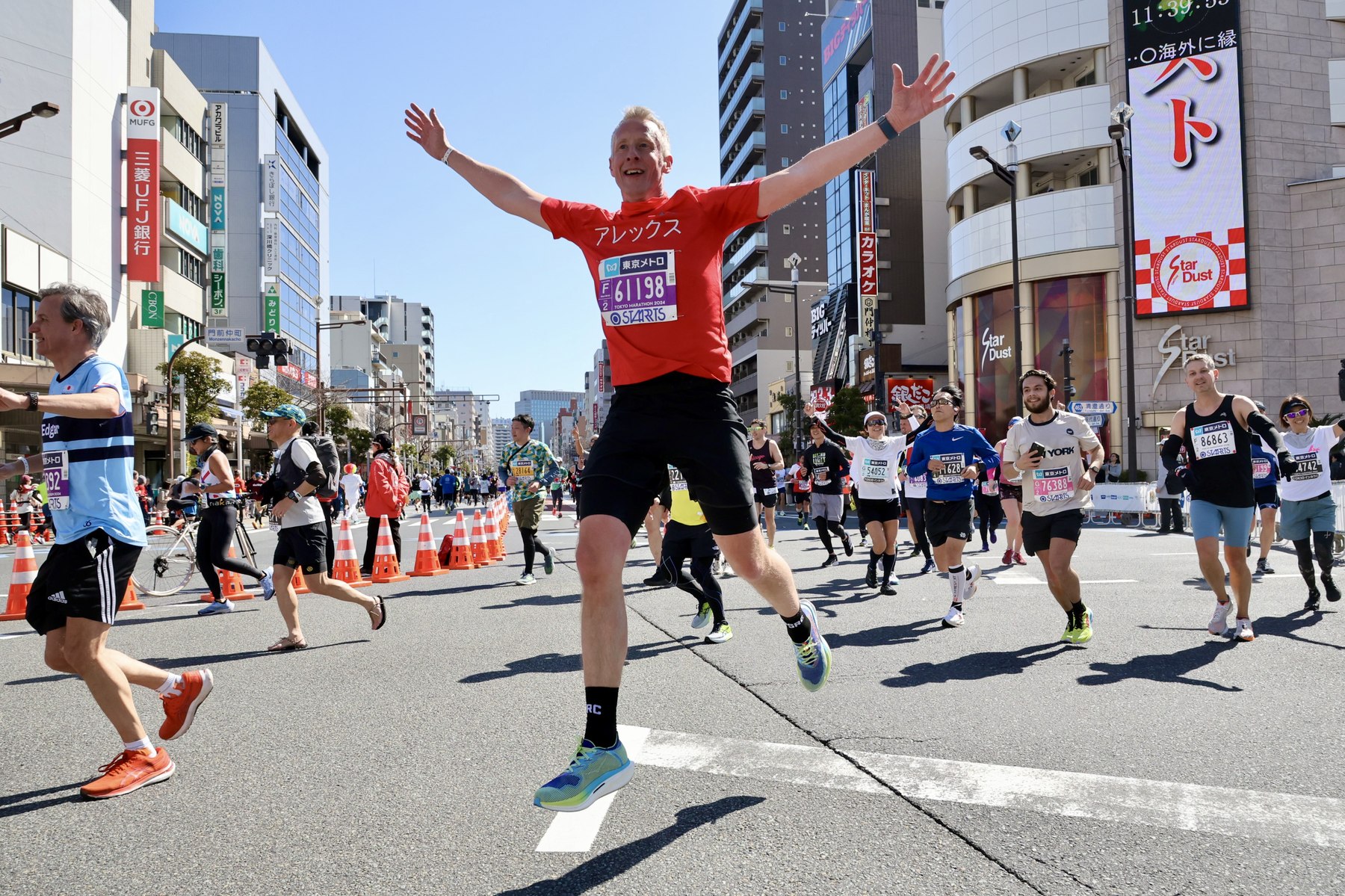
Tokyo Marathon 2024: on the course through Monzen-nakachō

With Team Joint Action supporters on the route
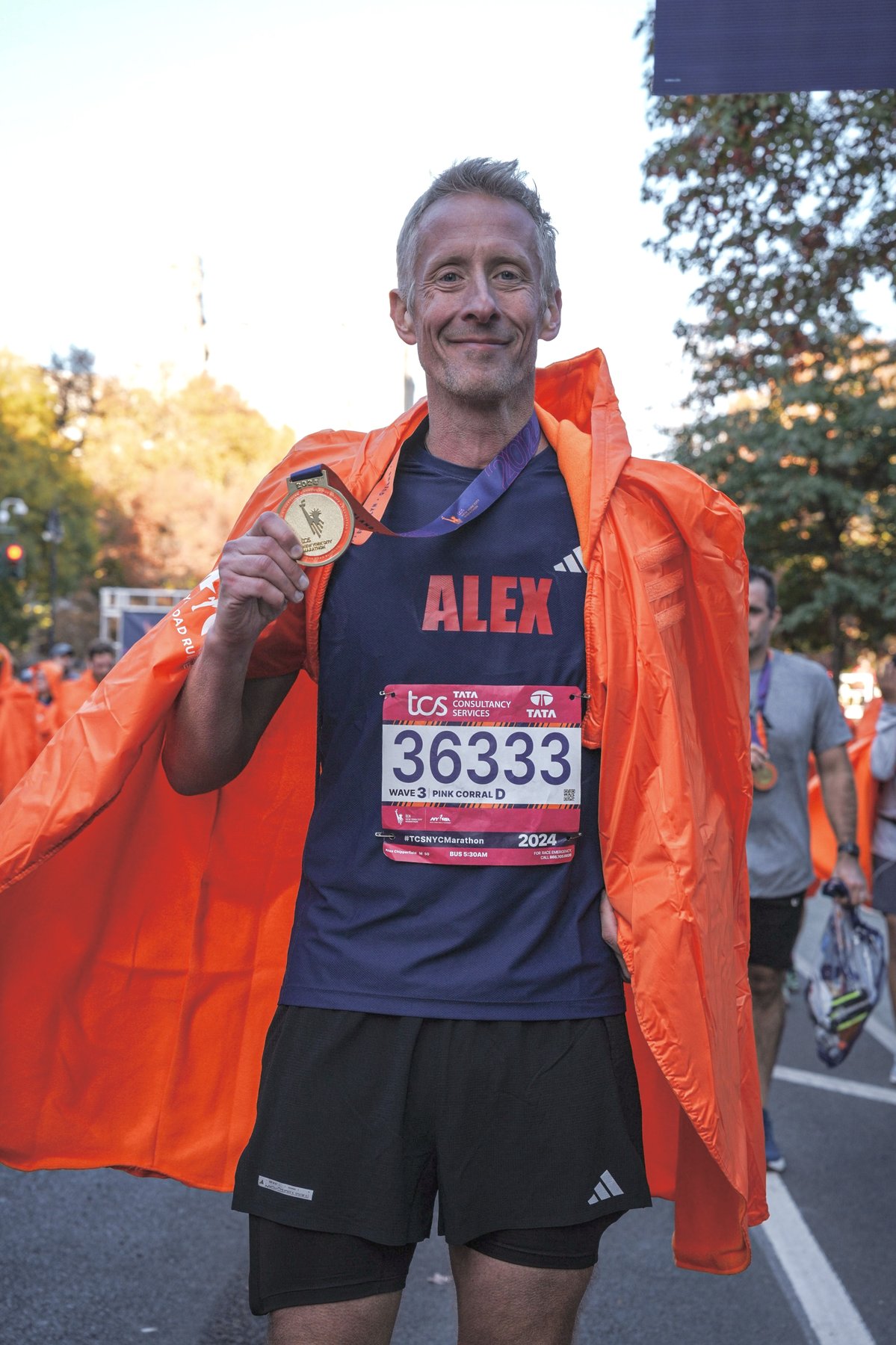
New York City Marathon 2024: finisher's medal
Took up marathon running for the first time, several years after starting to run recreationally near home in Kent.
Completed London, Tokyo, Berlin and New York in a single year, running New York on 3rd November to help celebrate his 50th birthday.
Crossed the finish line in 3 hours 32 minutes, his fastest marathon time to date.
His busiest year yet, including the TCS London Marathon for Joint Action, the research appeal of the British Orthopaedic Association. It was his fourth time running for them, raising funds for musculoskeletal research.
As an orthopaedic surgeon, Mr Chipperfield is well aware of the old assumption that marathon running wears knees out, and equally aware that the evidence doesn't straightforwardly back that up, particularly for first-time marathon runners.
Training for and completing a first marathon has been shown to improve the condition of the bone directly beneath the cartilage in the areas of the knee most prone to osteoarthritis, likely linked to the increase in blood flow that sustained training brings to the structures around the joint. It's a point he regularly makes to patients who assume giving up running is their only option once knee pain sets in.
That said, he's equally clear that established knee osteoarthritis is a different picture, which is where treatments like Arthrosamid® injections come in, offering a non-surgical option aimed at letting patients keep moving rather than stepping away from the activities, running included, that matter to them.
“I've run for you three times before and love supporting ‘my’ organisation” on running the 2026 TCS London Marathon for Joint Action, the British Orthopaedic Association's research appeal.
Evidence suggests training for a first marathon can improve subchondral bone quality rather than accelerate wear.
A single hydrogel injection designed to relieve knee osteoarthritis pain without taking patients out of the activities they value.
Marathon training now sits alongside cycling and swimming, including the London ‘Classics’ combining a Serpentine swim, a 100-mile ride and the London Marathon.
If knee pain is holding back your own running, cycling or walking, it's worth discussing your options at a consultation.
About Arthrosamid® Injections